
Developmental Delays & Neurodivergence

Attention-Deficit/Hyperactivity Disorder
More than just hyper or distracted
20 MINUTE READ
Published September 2024
AUTHOR
Rachel Oppenheimer, PysD
Contributing Editor, Licensed Psychologist

You want to consider and foster your child’s mental health from an early age, but don’t know exactly what that looks like. This is all new information! It may have never been modeled for you. What do you focus on? What do you look for? These are common questions whirling through parents’ minds. We’ll walk you through what you need to know about mental health and wellness in your 0-5 year old.

What ADHD is and is not
The patterns of inattention, distractibility, impulse control and hyperactivity that comprise ADHD impact children and their family members in multiple arenas. Children identified as having ADHD often have school and home challenges, social struggles, and behavioral differences. We know that there are genetic factors, as ADHD tends to run in families¹. We know too that it is a combination of neurotransmitters, brain structure, and environmental factors that determine the exact nature of the disorder.
ADHD is not one-size-fits all, and the experience of ADHD varies from person to person. It is not simply “bad behavior” or defiance (though it can look like behavioral issues, without proper context and understanding). It is not the result of bad parenting, or lack of discipline either. While not everyone who is identified as ADHD as a child goes on to experience adult ADHD (because it is a developmental condition, rarely, some people grow out of it, others respond so well to intervention that they no longer meet criteria), it is a persistent and long-lasting condition, not just a phase². This guide serves to provide an overview of ADHD, and offer specific parenting strategies.
Breaking it down further
A diagnosis of ADHD comes from either a medical professional, like a psychiatrist or pediatrician, or a clinical psychologist (See Screening and Assessment guide for more). It requires a combination of observation of the child as well as objective measures from multiple sources. Since part of the criteria for clinical diagnosis includes seeing symptoms in multiple settings, the evaluator will want information from parents and then information from someone else familiar with the child in a setting outside of home, such as preschool, swim class, dance, etc.
There are three types of ADHD; inattentive type, hyperactive type, and combined type (meaning features from each list)³. Symptoms of each include:
Inattentive Type
Trouble paying attention
Trouble staying focused
Careless mistakes
Seeming to not listen, or not hear
Trouble organizing tasks (i.e, not sure how to get started)
Forgetful
Hyperactive Type
Overly active
Hard to sit still
Fidget, run, or climb in inappropriate situations
Excessive talking
Interrupting others
Trouble waiting their turn
Additional diagnostic criteria include having the symptoms present for at least months, and that the symptoms aren’t better explained by a different mental health condition.
ADHD is a disorder of executive functioning
Executive functions primarily come from the frontal lobe of the brain. This is the last part of the brain to develop, and in fact is not fully developed until a person is in their 20s. It is because of this under-development that we do not let children drive cars - the brain structure is not there to support the myriad of attention and problem solving activities required that most of us now take for granted.
It is for this very reason that most very young children are not diagnosed with ADHD - there is an understanding that brain development needs to occur. Keep in mind age and developmental expectations. It is hard for any 3 year old to inhibit their impulse! This does not mean that they have ADHD, necessarily. This is also why some people no longer meet criteria for ADHD in adulthood, because the brain continues to develop. Outcomes related to executive functioning are improved if there are appropriate supports and interventions along the way, in childhood and adolescence⁵.
Treatment for ADHD should start from an attempt to modify the environment, and teaching behavior regulation strategies. Especially for preschool aged children, medication is not indicated unless behavioral therapy, parents strategies, classroom management, and teacher strategies have all been ineffective⁶. If medication is involved, careful physician oversight will be necessary, and there may be a trial and error aspect before finding the right medication or the right dosage. This may need to adjust as your child learns and grows. Keep in mind that all medications can have side effects - for many of the common ADHD medications, like stimulants, this can be an emotional toll, such as increased anxiety experience⁷.
Executive functioning difficulties in ADHD can look like the following⁴:
-
Difficulty getting started on tasks
Difficulty prioritizing what comes first
Difficulty organizing materials and thoughts related to the task
Stuff “everywhere”
Losing things frequently
-
Difficulty estimating how much time something will take
Difficulty anticipating consequences
Difficulty with sequential reasoning (what comes first, then what next)
Missing an “inner sense of time”
Late often
Difficulties with transitions
-
Difficulty regulating one's emotions
Difficulty staying engaged, especially in tasks that are less interesting or less stimulating
Impulse control difficulties
Emotional extremes
Difficulty calming down when ups
-
Difficulties breaking bigger problems into manageable steps
Difficulty inhibiting the first impulse strategy
Difficulty adjusting when working through a problem
Difficulty generalizing and applying skills learned previously
Easily frustrated
Decreased ability to persevere on tasks
-
Difficulty maintaining attention
Hyperfocus to the exclusion of other important aspects
Difficult to obtain attention
Distractibility
-
Difficulty with short term or working memory
Difficulty holding information in one’s brain to solve problems
Difficulty with tasks or instructions that have multiple steps
-
Difficulties managing thoughts
Difficulties focusing on what is important versus what is a distraction
Inhibition difficulties
Distractibility
Therapeutic goals include helping the child manage the symptoms of ADHD, and/or helping to create an environment that supports the child’s challenges. Parents are necessarily involved, as they will be learning alongside their child how to respond to impulsive behaviors, emotional dysregulation, or challenges in obtaining attention. Particular attention on helping parents provide praise and consistent consequences will help to promote positive behavior (see Functions of Behavior guide for more). As a child gets older, direct teaching of executive functions can include teaching a child how to use checklists, planners, timers, and other tools to help maintain organization and focus on tasks.
Social relationships are impacted by ADHD. The presentation of symptoms mean that people with ADHD may have trouble paying attention to social cues, like body language and facial expressions, they may interrupt others or speak out of turn, they may struggle to fully attend to friends, and may appear disorganized during social activities⁸. Chronic social difficulties can impact friendships and a child’s self esteem; social support and understanding can be critical.
Within the child’s environment, helping to provide structure and routine will help with organization, transitions and time management. Home and school can use visual cues like timers and countdowns to help with the routine. Checklists help stay on task and manage large projects. Even very young children can benefit from a simple checklist, with pictures to help cue them through their day. Minimizing distractions - not having background TV or music on, a simple workspace free of clutter and appealing pictures, and seating away from a lot of activity can help a lot. Children require movement and breaks - kids with ADHD may need more frequent breaks and opportunities for movement. They may work best on a “wiggle chair” or exercise ball, where their focus is actually improved because the sensory input allows them to manage distractions⁹.
There are some gender differences in both the presentation and identification of ADHD in children. Boys are more likely than girls to be diagnosed, and girls are more likely than boys to be diagnosed later in childhood. This is because girls tend to have more internalized, subtler symptoms (such as inattention, loss of focus) whereas boys tend to have more externalized traits (such as impulsive behaviors, hyperactivity)¹⁰. This is just a generalization, and research supports more similarities than differences in ADHD symptoms in childhood - boys may be “over referred” for treatment because of their more obvious (externalized) symptoms¹¹.
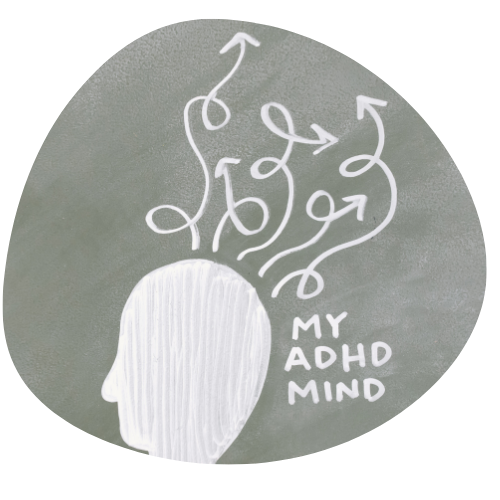
Within the neurodiversity movement, there is a shift away from focusing on the deficits and difficulties that come with a diagnosis like ADHD, and instead celebrating the strengths that come with the diversity of brains. Adults with ADHD and parents/caregivers of those with ADHD have identified numerous strengths that come with having an ADHD brain¹². These strengths tend to come out best in a supportive and understanding environment. These include, but are certainly not limited to the following:
-
While this was on the list of deficits, it can also mean that when in a task that is enjoyable and interesting, a person with ADHD can focus for hours on end, tuning out the world around them. They find it easier to get into that oh-so-desirable “flow state”
-
Others see people with ADHD as resilient, in addition to their own self-image. An individual with ADHD is more practiced at recovering from setbacks, and adjusting their course. There is an ongoing need for self-awareness - this becomes a protective strength leading to resilience and balance.
-
Because living with ADHD means often having to approach tasks unconventionally, a person with ADHD learns to become unique and unconventional problem solvers. People with ADHD tend to think of unusual and often effective solutions, because of their different perspectives.
-
People with ADHD have been found to have higher levels of social intelligence, humor, and empathy¹³. They tend to have a more positive, optimistic mental outlook, which tends to lead to better social outcomes.
This likely comes from the social challenges listed above - and learning through trial and error¹⁴.
-
Adventure is interesting! Impulsivity means also being willing to follow the more enjoyable route without overthinking the consequences and long term implications.
-
While hyperactivity is listed as a deficit and diagnostic criteria, it also means improved physical energy levels, which can benefit sports and other physical activities.

What the research says
The struggles that come with ADHD, such as distractibility, impulsivity, and over-activity are not intentional misbehaviors, but rather, are part of the executive functioning challenges that come with this diagnosis¹⁵.
The most effective treatment is cognitive behavioral therapy (CBT) and behavior management techniques - not every child with ADHD requires medication¹⁶.
Accurate diagnosis and appropriate treatment can make a significant impact in future outcomes for social, emotional, academic, and adult functioning¹⁷.
What your child with ADHD needs to know
Having an understanding of the unique executive functioning challenges that come with ADHD can help you as a parent determine the best strategies and supports to help your child - and family - thrive. Adjustments made within the whole family help decrease conflict, decrease distress, increase self-esteem, and improve overall daily functioning¹⁸. It's not about “fixing” your child, but rather about creating an inclusive and supportive environment that maximizes his or her strengths, and supports their challenges.
All children thrive on positive reinforcement and intuitive response from caregivers (see Intuitive Discipline guide for more). Children identified as having ADHD are particularly sensitive to praise and positive reinforcement, and struggle more with delayed reinforcement (promises in the future)¹⁹. Neurotypical brains tend to respond to differential and variable reinforcement - think about the slot machine, and how even though you don’t win every time, the possibility of winning keeps you playing and engaged - that one win (reinforcement) keeps you playing (the behavior) even though you didn’t win every time you pulled the lever. For an ADHD brain, because of the differences in executive functions, this variable reinforcement is not as effective²⁰. The ADHD brain wins (reinforcement) and plays again. When the person doesn’t win again, and again, the brain says “Well, that stopped working” and moves on. This can look like slower learning and reduced motivation in an academic or classroom environment. The child gets a lot of praise for completing a worksheet or assignment. As they are more successful, the teacher naturally decreases their praise. The child is not perceiving success because they aren’t receiving the frequent positive reinforcement that their ADHD brain requires, and so they stop completing work as effectively or efficiently - the payoff is no longer there.
Children with ADHD can become frustrated, give up, or begin to show more impulsive behaviors (a cue that they may be dysregulated) when they are asked to delay, or anticipate the reward²¹. Because of the differences in time management and anticipation of consequences it can be more difficult for a child with ADHD to tie the delayed reward with the behavior you are trying to reinforce. For a child with ADHD, small, immediate rewards (a sticker) will beget many more of the desired behaviors than asking them to sustain those behaviors all week, or all month, for a bigger prize at the end.
Punishment does not work - it tends to leave a child feeling ashamed, guilty, and dysregulated. The executive functions impacted by ADHD are out of their control, and a child will internalize the negative messages - they are not able to regulate behaviors and emotions the way a neurotypical child can²².
Discipline strategies that work with ADHD
-
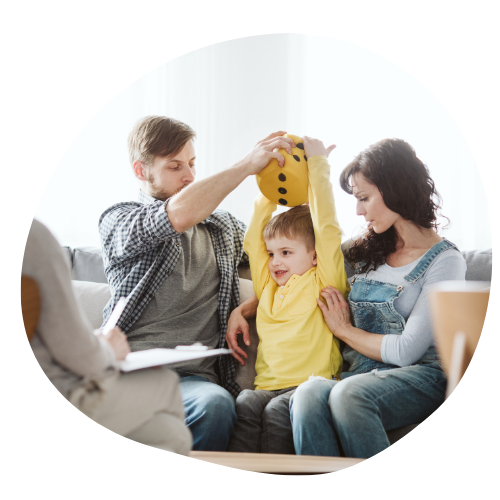
Because children with ADHD respond best to consistent and regular messages, it will be confusing if you are only enforcing the expectations variably. If the rule is that we never jump on the couch, that expectation should be maintained even if her cousin is visiting, even if we are tired, or even if the babysitter is there. Calm, redirection, and immediate praise for following directions. “Remember, it isn’t safe to jump like that. Thank you for listening the first time I asked you to stop jumping, that was great following directions to keep us safe!”
-
Try to reinforce and praise your child every time they are following rules and demonstrating behaviors you want to see more of. Your child should hear frequently about all the things that they are doing well - with minimal attention paid to the undesirable behaviors.
-
When it is safe, help your child learn about the cause and effect of their own actions through natural consequences. “When we don’t leave the house on time, we don’t have extra time to go to the park and visit with our friends. Next time, let's make sure that we are dressed and ready to go before we start playing, so we can make sure we leave on time.”
-
Because children with ADHD respond so well to frequent, consistent positive reinforcement, you can help maintain the desirable behaviors by providing small rewards, like a sticker on a chart or a pom-pom in a jar²³. These smaller rewards can also be used to build up to a larger reward, like a family movie night, or a bigger toy. This is helping to build the executive function of planning and forecasting, as well.
-
Help your child focus by making sure that you have their full attention when you are providing instructions and expectations. Help them stay organized by teaching them where things belong, and how to put things away. Keep things as clutter-free as possible, and this will help them hone and refine their focus for the important things.
-
No matter how distracted your child may be, they are going to respond and learn from your emotional response - this is part of the attachment you have developed after all! Your regulation helps your child maintain regulation, and helps to separate an undesirable behavior (out of their control) from the person (who you regard with unconditional positivity). Take a break, regroup, and come back to the behavior when you are feeling calm.
The messages in the world that your ADHD child is exposed to helps shape their self-concept. Children with ADHD tend to hear more negative messages and criticisms²⁴. They make more mistakes, and receive negative feedback regarding task completion, organization, and impulsivity. This creates a cycle of negative self-esteem, as well as self-doubt. Without the protective factors that come from an understanding and supportive environment, these messages can be internalized, leading to adult outcomes of reduced achievement, depression, anxiety, etc²⁵.
As the parent, you are also tasked with helping to counter the world’s harsh feedback. This can look like:
Celebrate strengths. Make a list of all of the positive attributes your child has, and revisit the list often. Add to the list regularly as your child grows and excels at more and more.
Focus on the big picture. Teach your child that we are not our mistakes, or our actions. We are composed of our strengths, values, talents, attributes.
Build and maintain connection and attachment. Offer unconditional acceptance and love, reassure them often that they have your support.
Help solve problems. Because of all of the challenges, it can be tempting to swoop in and save your child from having to problem-solve. When it is safe to do so, let your child figure it out - they will learn from doing and experimenting.
Model using resources. If you are helping your child with organization and time management using visual schedules and timers, have the whole family involved. This helps prevent your child from internalizing differences - rather, this is a strategy that helps everyone stay focused.
The most important thing your child with ADHD wants you to know is that they have the same need for connection, acceptance, love, and support as any other child would have. While they may have challenges (and challenges that challenge you), your relationship will help protect them against the bumps and falls of life - same as any neurotypical child would experience as well.
About the author
Rachel Oppenheimer, PhD, PMH-C
Dr. Rachel Oppenheimer is a licensed psychologist and licensed specialist in school psychology, licensed to practice in both Texas and Florida. She founded Upside Therapy & Evaluation Center in 2016, working in private practice prior to that.

Nutritionists
•
Adult mental health
•
Couples mental health
•
Infant & child mental health
•
Sleep coaching
•
Nutritionists • Adult mental health • Couples mental health • Infant & child mental health • Sleep coaching •

When to get
expert support
Sometimes you might need more support, and that's okay! Here are times you may consider reaching out to a specialist:
When you suspect that a formal diagnosis would allow for more support and interventions for your child
When behaviors feel out-of-control
When emotions feel out-of-control
If you aren’t able to communicate your child’s needs to other caregivers in their life (teachers, etc.)
If you need positive behavior support resources
-
Claussen, A. H., Holbrook, J. R., Hutchins, H. J., Robinson, L. R., Bloomfield, J., Meng, L., Bitsko, R. H., O’Masta, B., Cerles, A., Maher, B., Rush, M., & Kaminski, J. W. (2022). All in the family? A systematic review and meta-analysis of parenting and family environment as risk factors for attention-deficit/hyperactivity disorder (ADHD) in children. Prevention Science, 25(S2), 249–271. https://doi.org/10.1007/s11121-022-01358-4
Young, S., & Gudjonsson, G. H. (2007). Growing out of ADHD. Journal of Attention Disorders, 12(2), 162–169. https://doi.org/10.1177/1087054707299598
American Psychiatric Association (2013) Diagnostic and statistical manual of mental disorders (5th ed)
Diamond, A. (2013). Executive Functions. Annual Review of Psychology, 64, 135–168. https://doi.org/10.1146/annurev-psych-113011-143750
Shaw, M., Hodgkins, P., Caci, H., Young, S., Kahle, J., Woods, A. G., & Arnold, L. E. (2012). A systematic review and analysis of long-term outcomes in attention deficit hyperactivity disorder: Effects of treatment and non-treatment. BMC Medicine, 10(1). https://doi.org/10.1186/1741-7015-10-99
Felt, B. T., Biermann, B., Christner, J., Kochhar, P., & Van Harrison, R. (2014). Diagnosis and Management of ADHD in Children. American Family Physician, 90(7), 456–464.
Bryant, A., Schlesinger, H., Sideri, A., Holmes, J., Buitelaar, J., & Meiser-Stedman, R. (2022). A meta-analytic review of the impact of ADHD medications on anxiety and depression in children and adolescents. European Child & Adolescent Psychiatry, 32(10), 1885–1898. https://doi.org/10.1007/s00787-022-02004-8
Carpenter Rich, E., Loo, S. K., Yang, M., Dang, J., & Smalley, S. L. (2009). Social functioning difficulties in ADHD: Association with PDD risk. Clinical Child Psychology and Psychiatry, 14(3), 329–344. https://doi.org/10.1177/1359104508100890
Betker, C. (2017). Environmental strategies for managing attention deficit hyperactivity disorder. Journal of Childhood & Developmental Disorders, 03(04). https://doi.org/10.4172/2472-1786.100062
Skogli, E. W., Teicher, M. H., Andersen, P. N., Hovik, K. T., & Øie, M. (2013). ADHD in girls and boys – gender differences in co-existing symptoms and executive function measures. BMC Psychiatry, 13(1). https://doi.org/10.1186/1471-244x-13-298
Rucklidge, J. J. (2010). Gender differences in attention-deficit/hyperactivity disorder. Psychiatry Clinics of North America, 33(2), 357–373. https://doi.org/10.1016/j.psc.2010.01.006.
Nordby, E. S., Guribye, F., Nordgreen, T., & Lundervold, A. J. (2023). Silver linings of ADHD: A thematic analysis of adults’ positive experiences with living with ADHD. BMJ Open, 13(10). https://doi.org/10.1136/bmjopen-2023-072052
Sedgwick, J. A., Merwood, A., & Asherson, P. (2018). The positive aspects of attention deficit hyperactivity disorder: A qualitative investigation of successful adults with ADHD. ADHD Attention Deficit and Hyperactivity Disorders, 11(3), 241–253. https://doi.org/10.1007/s12402-018-0277-6
Aduen, P. A., Day, T. N., Kofler, M. J., Harmon, S. L., Wells, E. L., & Sarver, D. E. (2018). Social Problems in ADHD: Is it a skills acquisition or performance problem? Journal of Psychopathology and Behavioral Assessment, 40(3), 440–451. https://doi.org/10.1007/s10862-018-9649-7
Matheis, Dr. L. (2020, December 14). What is ADHD? it’s not misbehavior, manipulation, or permissive parenting. ADDitude. https://www.additudemag.com/what-is-adhd-myths-truths/
Drechsler, R., Brem, S., Brandeis, D., Grünblatt, E., Berger, G., & Walitza, S. (2020). ADHD: Current concepts and treatments in children and adolescents. Neuropediatrics, 51(05), 315–335. https://doi.org/10.1055/s-0040-1701658
Ogundele, M. O., & Ayyash, H. F. (2023). ADHD in children and adolescents: Review of current practice of non-pharmacological and behavioural management. AIMS Public Health, 10(1), 35–51. https://doi.org/10.3934/publichealth.2023004
Babinski, D. E., & Sibley, M. H. (2021). Family‐based treatments for attention‐deficit/hyperactivity disorder: A review of family functioning outcomes in randomized controlled trials from 2010 to 2019. Journal of Marital and Family Therapy, 48(1), 83–106. https://doi.org/10.1111/jmft.12572
van der Oord, S., & Tripp, G. (2020). How to improve behavioral parent and teacher training for children with ADHD: Integrating empirical research on learning and motivation into treatment. Clinical Child and Family Psychology Review, 23(4), 577–604. https://doi.org/10.1007/s10567-020-00327-z
Hulsbosch, A.-K., De Meyer, H., Beckers, T., Danckaerts, M., Van Liefferinge, D., Tripp, G., & Van der Oord, S. (2021). Systematic review: Attention-deficit/hyperactivity disorder and instrumental learning. Journal of the American Academy of Child & Adolescent Psychiatry, 60(11), 1367–1381. https://doi.org/10.1016/j.jaac.2021.03.009
Tripp, G., & Alsop, B. (2001). Sensitivity to reward delay in children with attention deficit hyperactivity disorder (ADHD). Journal of Child Psychology and Psychiatry, 42(5), 691–698. https://doi.org/10.1111/1469-7610.0076
Merriam R. Sarcia Saunders, L. (2024, June 11). The secret to better behavior? no punishment at all. ADDitude. https://www.additudemag.com/child-discipline-adhd-strategies/
Novick, I. (2021, June 10). Parent’s quick guide for disciplining kids who have ADHD. Psych Central. https://psychcentral.com/adhd/parents-guide-for-disciplining-kids-with-adhd
Jellinek, M.S. (2010, May 1) Don’t let ADHD crush children’s self-esteem. MDedge. https://www.mdedge.com/psychiatry/article/23971/pediatrics/dont-let-adhd-crush-childrens-self-esteem
Houck, G., Kendall, J., Miller, A., Morrell, P., & Wiebe, G. (2011). Self-concept in children and adolescents with attention deficit hyperactivity disorder. Journal of Pediatric Nursing, 26(3), 239–247. https://doi.org/10.1016/j.pedn.2010.02.004