
Development & Behavior

Functions of Behavior
Why do they do the things they do?
20 MINUTE READ
Published September 2024
AUTHOR
Rachel Oppenheimer, PysD
Contributing Editor, Licensed Psychologist

Everything happens for a reason. While this cliche isn’t always true, it does have universal truth in the realm of behavior. Even in the most head-scratching of parental dilemma, your child has a reason behind their actions. We can understand why, increase the behaviors we want to see, and discourage the behaviors we don’t, with an understanding of the functions behind behavior. While the principles behind this guide are drawn from the evidence-based treatment for neurodivergence of Applied Behavior Analysis (ABA), the information included can be helpful for understanding the “why” behind all behavior¹!

Understand the behavior, understand the child

While children and their behaviors are wide, vast, varied, and diverse, research has shown us that all of a person’s behaviors can be distilled down to four basic functions². With some observation, practice, and a little scientific reasoning, not only can we understand the reasoning and rationale behind the behavior, but we can also use this understanding to redirect and replace the behavior, if it is inappropriate or disruptive. If it's a behavior we want to see more of (think, sharing nicely with one’s sister), we can use this understanding to hopefully increase, and see more of that behavior.
There is also a need for understanding and acceptance. Children learn through cause and effect, and by doing. The purpose of understanding - and shaping - these behaviors is not to change the little person your child is growing up to be. Rather, you are wanting to increase desirable and prosocial behaviors, and decrease undesirable behaviors. You will use tools like praise, redirection, validation, and ignoring - with an understanding that you are not changing the person, or the personality. The goal is not forced compliance - rather, it's about motivation, meeting needs, and accepting your child for who they are³. Helping a child demonstrate more adaptive behaviors - including expressing oneself more effectively, increasing independence, and reducing challenging behaviors - means more successful outcomes in school, during adolescence, and into adulthood⁴.
Breaking it down further
When referring to behavior, this is broader than discipline and following - or not following - rules. Rather, any observable and measurable action a behavior⁵. All humans - and animals - display behaviors. For children who are preverbal, nonverbal, or struggle to communicate conventionally, behaviors can be an important cue and key in understanding their inner experience.
Understanding behavior also means understanding how to modify, or shape behavior. When we offer praise and rewards, we are reinforcing the behavior. When we scold, take away privileges, or remove our attention from an undesirable action, we are punishing the behavior. Reinforcement is anything that we do to increase the likelihood of seeing a behavior, and punishment decreases the behavior. Confusingly, both reinforcement and punishment can be positive or negative, depending on if something is added or removed from the equation. In this context, the term punishment is a purely scientific term - intuitive parenting means that we want to respond, validate, and redirect to modify behavior.
Positive
-
Something added, increasing the likelihood of a behavior
Example: A sticker on the sticker chart for putting toys away.
-
Something is added to decrease the likelihood of a behavior
Example: Having your child help clean up the spilled milk after they deliberately dumped it over.
Negative
-
Something is removed to increase the likelihood of behavior
Example: The loud dinging sound your car might make when your children unbuckle before you are parked.
-
Something is removed to decrease the likelihood of behavior
Example: Taking away screen time after she pushed her sister.
In order to know how to respond, and what you should be adding, removing, reinforcing or trying to eliminate,, it is critical to understand WHY a certain behavior happens. Understanding the functions of behavior can help parents decode confusing behaviors, and have intentional and effective responses.
The function of the behavior refers to what is underlying the behavior⁶. Even without our conscious awareness, everything we do has a reason or a why behind it. Behavior analysts have distilled behaviors down to four basic functions:
-
Attention is a majorly reinforcing function. Our children are wired to want and need our interaction and attention - even when they are wired a little bit differently. Of course every child’s need for attention is different, but anytime someone does a behavior to elicit feedback or a response from another, attention is a function. This is a valid need, and by proactively connecting and “filling” our child’s cup we are providing them positive attention. Even being scolded is attention, but we want to reinforce positive bids for attention, and redirect some of the negative bids. Drawing mommy a picture to elicit praise has a function of attention. Making silly sounds when you’ve asked her to be quiet definitely has the function of attention. Interrupting you every time you are on the phone? He wants your attention!
-
Escape is any behavior with the intention of avoiding something that the child considered unpleasant or upsetting. The tummy ache that magically disappears as soon as you call the daycare? Escape! Those extra requests for snuggles and water at bedtime? Escaping the unpleasantness of you leaving the room. Running away as soon as you try to put on their socks to leave? Escaping the car seat and car ride!
-
Access refers to specific, tangible items. Your pantry climber who found your stash of cookies wants those cookies! When you are potty training, the compliance you get for trying to sit on the potty with a bribe of screen time has far more to do with getting more screen time than it has to do with graduating to underwear. The toddler who snatches everything from his sister wants what she has!
-
Sensory stimulation is more of an internal reinforcement - this is behavior done because it feels good. We tend to see more of these types of behaviors in children who are neurodivergent - it is the “why” behind rocking, hand-flapping, or other “stimming,” behaviors in autism (see our Neurodivergent Guide for more). It’s why slime was such a craze, why kids suck their thumb, and why your coworker always bounces her knee.
There is a fifth, somewhat controversial function - control. Controversial, because it really isn’t a separate category. Autonomy is an essential part of growing and individuating, and when a child displays behaviors that have a function of control, there is also an aspect of access. Screaming, “No, I want mommy to read me the book, not daddy,” as he tantrums is really about the function of access to mommy. Refusing to let her sister sit in the blue chair is about access to the blue chair. However, it's helpful to talk about and examine in the context of understanding behavior, because the element of control may be a factor⁷.
This is complicated stuff, because in the heat of the moment, there are a lot of behaviors, and a lot of variables to consider. If you have a child that is melting down it doesn’t make sense to run through all of these theories to see what fits. Rather, there is an equation that can help you figure out the function of a behavior - and what you can do to increase, or decrease, said behavior.
Antecedent
Behavior
Consequence/Outcome
A ->
B ->
C ->
The antecedent refers to what is happening immediately before the behavior. Does she always get silly when you ask her to brush her teeth? Does he pull his hair while you are driving to school? Do they rip the paper as soon as the teacher puts it on their desk? Brushing teeth, the drive to school and the implied demand of doing desk work are all the antecedents in these examples.
As far as the outcomes, that's the part that is usually easiest to change and control. How you respond to the behavior will shape and predict if you will see more or less of the behavior moving forward. Natural experiences are also consequences. Throwing one's ice cream cone on the ground (behavior) because big sister got a bigger seeming scoop (antecedent) leads to no more ice cream (natural consequence). If Aunt Jan felt bad, and replaced the ice cream, it reinforces the behavior. Now, we’ve increased the chances of having ice cream thrown on the floor, because it results in more ice cream! Natural consequences are the most powerful when it comes to changing behavior⁸.
Another type of outcome is logical consequences - this is when a child already knows and understands the rules, and there is a pre-arranged response to a behavior. “If you take the blocks he was using, we can’t all enjoy them together. If you take the blocks again, I’ll ask you to leave this play table.” If he goes ahead and swipes the blocks after this rule has been set, the logical consequence is then followed through with.
In both types of consequences, natural and logical, the cause-and-effect is logical and rational. We are staying neutral, not letting our emotions become another consequence (or antecedent), and we are responding with empathy, because it is hard to have a growing brain that has not fully developed the frontal lobe - the area that sees cause and effect. It is the very nature of consequences that helps shape this part of the brain, learning what happens when I do this - or this - or that!
It can be complicated and difficult to discern behaviors, and to figure out the function behind them. A lot of behaviors can happen at once, and sometimes there are multiple functions at play⁹. Behavior analysts have masters or doctorate degrees studying behaviors all day long, and even they can struggle to identify functions - you are just trying to get her to put on her shoes! Figuring out the function of the behavior can be particularly helpful for problematic, continuous, repeated behavior scenarios. It takes some hypothesis testing, and thinking like a scientist.
The extinction burst - it gets worse before it gets better
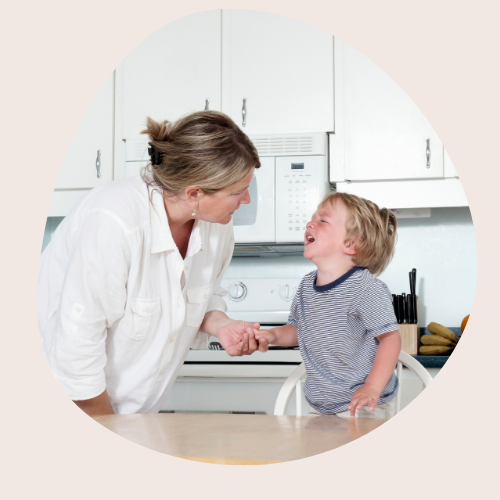
If you are trying to eliminate a behavior, such as whining / tantruming / hitting, or other problematic behaviors, it is important to bear in mind that it will likely get worse before it gets better. This phenomenon is known as the extinction burst. When something previously reinforcing stops being reinforced, typically a person will increase the behavior in an effort to get that same reinforcement before the behavior goes away¹⁰. If a child is used to whining for your attention, and you have decided to start ignoring, rather than give that behavior reinforcement, the whining will likely get more intense before your child realizes, “Hmm, this isn’t working any more” and drops the behavior.

What the research says
It is hard to target or change a behavior without understanding what we are targeting and why¹¹
We can prevent other undesirable behaviors if we can replace / redirect appropriately¹²
Understanding the “why” behind behaviors helps increase empathy and understanding¹³
Behavior is a form of language - if we understand the behavior, we can understand children even when they are nonverbal¹⁴
What it might look like
Ella at the Playground
Four-year-old Ella went to the park with her mom after school pretty regularly - there were some other kids her age that she met up with and typically played nicely with. Ella loved the walk to the park, pointing out flowers and bugs she found interesting to her mother. As they became more frequent visitors, Ella’s mom naturally began to chat with other parents, and develop friendships of her own. During one of their walks, Ella’s mother remembered that one of her new friends had a really important meeting earlier that day - she started to text her friend asking if she should be celebratory or stoic on her arrival to the park. Ella tried to point out a really cool roly-poly bug, but, Mom was on her phone.
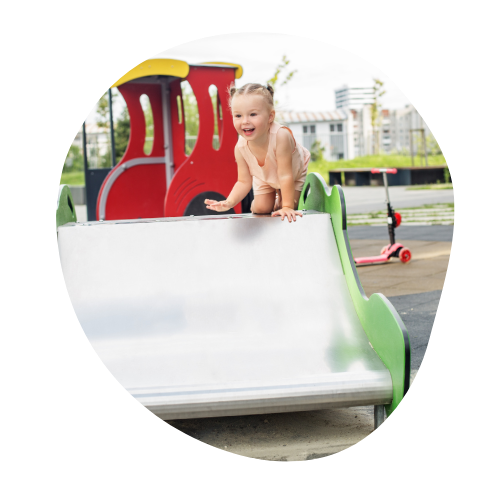
When they got to the park, Ella’s mother went straight to her friends, while Ella bee-lined for her own friends - that was typical at this point. The mom’s all stood around talking as the kids played. Ella, who usually played so nicely with others, seemed to be hanging back - looking back at her mom, and then looking at the kids. She saw that another girl was on her favorite swing, and so she made her way to the swing, and gave a big shove. “Thanks for the push, Ella!” Mom didn’t seem to notice.
Ella then started to go to the play structure - she was always afraid to climb up to the higher slide, but today she was feeling different. She started to climb, and looked back at Mom - still talking. She didn’t notice. Ella made it all the way to the top!!! Mom definitely would notice that!! Ella leaned over the tower, calling to her mom, “Mom!! Mom look!! Mommy look at me!” Mom looked up at Ella and gave her the “thumbs up” sign, and kept talking.
Ella knew just what to do. She took her shoes off, and slid one, and then the other, down the slide. Then, she was stuck - she couldn’t go down the slide without shoes! She would get dirty, and have mulch on her socks! And she couldn’t climb down - mom would have to notice and save her. She looked over at the parents - Mom was still talking, didn’t even notice that Ella took her shoes off.
Ella started to cry. She saw some of the kids around her look her way, and that made Ella cry harder. She started to wail! She was stuck, mom wasn’t paying any attention to her, and she was all alone. Her crying worked! Mom heard her, and noticed the shoes on the ground. “What happened, Ella? Why are your shoes off?” Mom called up to her.
Ella cried her hardest yet - mom awkwardly made her way to the top of the structure to meet Ella. She pulled Ella into her lap. “Are you feeling ignored, sweet girl?” Ella’s mother noticed a pattern of whiny and crying behavior when Ella perceived that she didn’t have Mom’s full attention.
“I’m sorry. I was excited to talk to my friend, but that’s no excuse, I know this is our special time together. Let's get these shoes on, and start heading home.” Normally, the transition from the playground to head home was a tough one, but this time, Ella’s mom knew what her kiddo needed.
This did reinforce the behavior - Ella knows now that crying is the fastest way to get mom’s attention. Mom needs to look out for those prosocial behaviors in the future, and layer on praise and attention - this will reinforce those behaviors instead.
-
Ella’s mom gave attention elsewhere.
-
Prosocial behavior (pushing friend on swing)
Controlled risk (climbing to the top of the play structure)
Throwing shoes
Crying
-
Mom came up onto the play structure with Ella, gave her a hug, undivided attention.
-
Attention
Max’s Tattoos
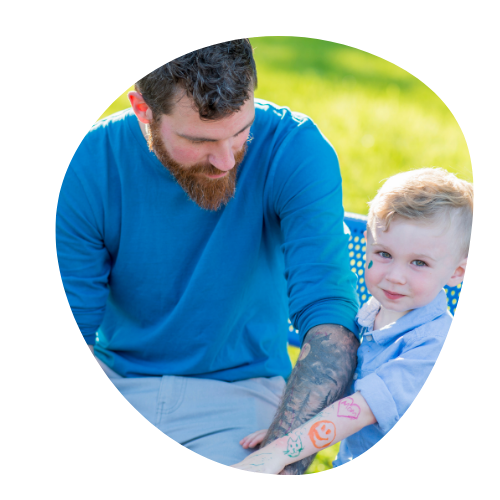
Three-year-old Max was ready to start potty training. Dad read online that using stickers can help increase practice sits, and can help with potty training overall, so he introduced the concept to Max. “Max, everytime you sit on the potty, you can have two stickers - what do you think?” Max had inherited his heavily tattooed father’s love of body art - he thought that this sounded like a pretty sweet deal.
Things started out ideally - Max still needed the diaper for nighttimes and naps, but he very quickly mastered sitting on the potty, happily covering his arms with stickers throughout the day, and by a week into potty training, he had eliminated accidents - unless he was really really distracted, or there wasn’t a potty nearby.
Max’s parents started to forget and “forget” the stickers - though Max still maintained his potty gains, he wasn’t as happy about it, and his distractions - and accidents - started to increase. Max would whine and protest going to sit on the potty, and it would require bribery - upping the cost to 3 and then 4 stickers, to convince Max to “try” to go potty before car rides and friend visits. Soon, to ask to go to the bathroom, Max would say “I need a tattoo!” Mom and Dad joked that he would be in college, covering himself in stickers in the dorm bathrooms.
Max probably won’t be in college demanding stickers! Now that he is mastering toilet training, it’s time to start decreasing the frequency of his stickers so that he is getting them every other time - every third time - once a day - once a week - until they have faded away. This was an effective use of reinforcement!
-
Connection between trying to go potty and obtaining stickers was established.
-
Trying to sit on the potty
Whining / protesting
Asking
-
Max got stickers! He got more stickers as he completed the behaviors.
-
Access to tangible
Stimming Sounds
Five- year-old Samuel was usually easy going. He was identified earlier as being on the autism spectrum, thanks to concerns from his daycare provider and follow up screening from his pediatrician (see our Screening and Assessment guide). Now, he was thriving thanks to all of the support he had - speech therapy, social skills play group, and occupational therapy. He was starting to use one and two words, and his parents were observing a lot fewer meltdowns as he was able to express himself, and his world became more predictable.
The problem with all of those therapies is that they spent a lot of time in the car. Samuel would get restless, and it didn’t matter how much Samuel’s mother tried to talk to him in the car, eventually, the raspberries would start. Samuel would press his lips together and blow, making a sound that his mother found irritating and triggering. Samuel’s mother tried music, she tried books on tape, she tried opening the window (which he did NOT like). She tried to explain to Samuel that she didn’t like the sound, that it was distracting and unsafe for her to be distracted. Sure, the first time, and even the 30th time, she could ignore it. It was the 300th time, though, and Samuel didn’t seem to be stopping.
She also didn’t like how it made Samuel look. They were heading for his social skills group, and his raspberry routine had resulted in spittle all over his chin and the front of his shirt.
Samuel seemed to know that they were arriving to his group, and he stopped the sound as they neared the parking lot. Samuel’s mother noticed that he only did it when it was just her in the car - even Dad in the car with them could make the behavior cease.
She had tried hard, when Samuel was diagnosed, to commit to never changing him. She knew that blowing raspberries was not hurting him, or anyone else, and who cared if he had spit on his chin, in the grand scheme of things. She had thought about wearing headphones, but that was unsafe while driving. Maybe she could talk to his occupational therapist about this….
Great idea talking to the occupational therapist (OT) about this! Working on repetitive behaviors like this is in the realm of OT. The goal should be to replace the behavior with something that makes driving feel a little bit safer for mom. When targeting “stim” behaviors, it's important to remember that the function is sensory - this is serving a purpose for the child. It should only be intervened if it is harmful, or has the potential to cause harm in some way¹⁵. The OT will use their training to find a replacement that meets that sensory function while also causing less distraction for mom. Examples may be a pinwheel to blow (reinforcing a smooth air blow instead of raspberry), a chewy to occupy his mouth, or some other sensory tool.
-
Car rides
-
Blowing raspberries / spitting (Aka “stimming” - self stimulatory behavior)
-
Felt good! Maybe a wet shirt and wet chin, but those things dry.
Mom seemed to be annoyed.
-
Sensory (With maybe a little bit of attention, too - depending on how much Samuel knows of Mom’s annoyance)
Bedtime Tactics
Four-year-old Violet is going through a phase. Up until now, she has been a happy sleeper, benefitting from the routines and structure that her parents put into place in her infancy. Now, her world is getting bigger. She has started school, started swim lessons, and her vocabulary has exploded. She enjoys reading books in their night time routine, and talking to her parents about her day as they put her to bed.
Lately, Violet has been stalling. She has been slow to transition from playing to bathtime, and will create diversions during bathtime, prolonging that activity as well. Yesterday, she poured an entire cup of water onto the floor, and then refused to get out of the tub, necessitating that she be physically picked up out of the bath. Then, absolute silliness when it came time to put on her pjs. Some horse play was fine, but she was rolling around on the floor, kicking out, and hysterically laughing - far beyond when Dad was playing along.
When she was finally in the bed, more stall tactics were employed. She knew that she got two books each night - she brought a stack of books to the bed, and cried when Dad told her that the limit was two. Sniffling, she picked her two books, and got into bed. Once the books were done, she wanted water. Dad turned the lamp off, tucked her favorite stuffy in with her, and promised to bring back her cup.
When he came back in, she was sitting up in bed and looking through another book. “Violet, its bedtime - back in bed.” He tucked her back in, and kissed her goodnight.
Not even five minutes later, Violet’s parents heard the little voice in the hallway. “Daddy? I’m scared.” This time, Mom headed in. She repeated the steps from earlier, reassuring Violet that Mommy and Daddy were just in the next room, and would keep her safe. A kiss goodnight, and that should have been that.
Until Violet walked back into the room, holding her stuffy in hand. “I’m just not tired! Can I stay up for 5 more minutes?” She asked. Mom and Dad exchanged a look.
“Violet, you know it’s time for bed. I know you feel like you want to stay up.” Dad said. “But, you feel so much better when you’ve had a good sleep, and tomorrow is another fun day at school.” He took her by the hand, and led her back to bed.
Mom and Dad did a good job of holding this limit. If Violet had been successful in her negotiations, her behavior would be reinforced - it would teach her that these steps - and even upping the ante more - lead to her getting out of what she doesn’t want, which is to be alone in her room at bedtime.
-
Bedtime
-
Stalling
Silliness
Bartering
-
Brief moments of reprieve from being alone at bedtime
More time with mom and Dad
-
Escape (from bedtime - Violet wanted to stay up and didn’t want to be alone)
Attention
About the author
Rachel Oppenheimer, PhD, PMH-C
Dr. Rachel Oppenheimer is a licensed psychologist and licensed specialist in school psychology, licensed to practice in both Texas and Florida. She founded Upside Therapy & Evaluation Center in 2016, working in private practice prior to that.
Resources our Experts Love

How To Think Like A Behavior Analyst: Understanding the Science That Can Change Your Life ↗
Beyond Behaviors: Using Brain Science and Compassion to Understand and Solve Children’s Behavioral Challenges ↗
1-2-3 Magic: Gentle 3-Step Child & Toddler Discipline for Calm, Effective, and Happy Parenting ↗
Podcast: Parenting Behavior with Dr. Andy Kahn ↗
Nutritionists
•
Adult mental health
•
Couples mental health
•
Infant & child mental health
•
Sleep coaching
•
Nutritionists • Adult mental health • Couples mental health • Infant & child mental health • Sleep coaching •

When to get
expert support
Sometimes you might need more support, and that's okay! Here are times you may consider reaching out to a specialist:
When behaviors are dangerous, self-injurious, or unmanageable
When you can’t figure out the function of a behavior, no matter how much you test hypothesis
When the behavior is triggering something in you
If you just want to brainstorm
If your child is experiencing distress because of the behavior
-
Eckes, T., Buhlmann, U., Holling, H.-D., & Möllmann, A. (2023). Comprehensive ABA-based interventions in the treatment of children with autism spectrum disorder – a meta-analysis. BMC Psychiatry, 23(1). https://doi.org/10.1186/s12888-022-04412-1
Alstot, A. E., & Alstot, C. D. (2015). Behavior management: Examining the functions of behavior. Journal of Physical Education, Recreation & Dance, 86(2), 22–28. https://doi.org/10.1080/07303084.2014.988373
Wilkenfeld, D. A., & McCarthy, A. M. (2020). Ethical concerns with applied behavior analysis for autism spectrum “disorder.” Kennedy Institute of Ethics Journal, 30(1), 31–69. https://doi.org/10.1353/ken.2020.0000
Choi, K. R., Bhakta, B., Knight, E. A., Becerra-Culqui, T. A., Gahre, T. L., Zima, B., & Coleman, K. J. (2021). Patient outcomes after applied behavior analysis for autism spectrum disorder. Journal of Developmental & Behavioral Pediatrics, 43(1), 9–16. https://doi.org/10.1097/dbp.0000000000000995
Noldus. (2023, July 11). What is behavior? https://www.noldus.com/blog/what-is-behavior
Simon, H. A. (1992). What is an “explanation” of behavior? Psychological Science, 3(3), 150–161. https://doi.org/10.1111/j.1467-9280.1992.tb00017.x
Marken, R. S. (1988). The nature of behavior: Control as fact and theory. Behavioral Science, 33(3), 196–206. https://doi.org/10.1002/bs.3830330304
Horcones, C. L. (1992). Natural reinforcement: A way to improve education. Journal of Applied Behavior Analysis, 25(1), 71–75. https://doi.org/10.1901/jaba.1992.25-71
Long, S. (2021, May 12). Multiply controlled behaviors. The Autism Helper. https://theautismhelper.com/multiply-controlled-behaviors-2/
Shahan, T. A. (2022). A theory of the extinction burst. Perspectives on Behavior Science, 45(3), 495–519. https://doi.org/10.1007/s40614-022-00340-3
Malott, M. E., & Glenn, S. S. (2006). Targets of intervention in cultural and behavioral change. Behavior and Social Issues, 15(1), 31–57. https://doi.org/10.5210/bsi.v15i1.344
Dropik, P., & Reichle, J. (2001). Developing an intervention strategy to replace challenging behavior used to escape undesired activities: A case example. Perspectives on Augmentative and Alternative Communication, 10(1), 8–10. https://doi.org/10.1044/aac10.1.8
American Psychological Association. (2021). Cultivating empathy. Monitor on Psychology. https://www.apa.org/monitor/2021/11/feature-cultivating-empathy
U.S. Department of Health and Human Services. (2020). Autism spectrum disorder: Communication problems in children. National Institute of Deafness and Other Communication Disorders. https://www.nidcd.nih.gov/health/autism-spectrum-disorder-communication-problems-children
Stimming - a guide for all audiences. National Autistic Society. (2020). https://www.autism.org.uk/advice-and-guidance/topics/behaviour/stimming/all-audiences