
Developmental Delays & Neurodivergence

Autism Spectrum Disorder
The Overview
20 MINUTE READ
Published December 2024
AUTHOR
Rachel Oppenheimer, PysD
Contributing Editor, Licensed Psychologist

Autism spectrum disorder (ASD) is a diverse presentation of symptoms - and strengths! While no two people with ASD are exactly alike, we aim to provide an overview of exactly what makes up the autism spectrum, and some strategies to help support your child or loved one on the spectrum.

The Experience of the Spectrum
Autism spectrum disorder (ASD) is a neurodevelopmental condition. There is a wide range of challenges and behaviors associated, but typically one will see differences in communication, social interactions, behaviors, and sensory experiences. It is called a “spectrum” because of the very diverse presentation in individuals ¹. A common saying in the ASD world - “If you’ve met one person with ASD, you’ve met one person.” It can be challenging to generalize across the spectrum, as each presentation is unique. However, there are some common challenges - and strengths - that come with ASD.

Breaking it down further
ASD is a condition related to brain development. How a person interacts and perceives their world is the primary feature of ASD, and is why the various domains associated are impacted (communication, social, and behavioral). Research is ongoing on just how the brain is impacted by ASD, but we have learned that there is an overgrowth of certain brain regions in infants later diagnosed with ASD ². This is behind the “intense world theory” of ASD, which suggests that one cause of autism is in the over development of neural circuits in the brain - this may be what leads to some of the traits seen in ASD including hyper-focus, hyper-emotionality, hyper-perception/sensation, etc ³.
Because ASD looks so different from person to person, it can be hard to generalize what ASD looks like in broad terms. However, challenges may look like:
Communication Differences ⁴ :
Late development of language
Starting to develop language and then regressing
Strong vocabulary in one area, with very limited vocabulary elsewhere (knowing every dinosaur name, but unable to label household items, for example)
Hyperlexia - advanced and early language development (talking like a “little professor” or overly formal)
No verbal language at all
Repetitive language - of oneself, or others (also known as echolalia)
Unusual tone, or speaking in sing-song voice
Inability to carry on a back and forth conversation
Non-response to calling of one's name
Difficulty incorporating gestures with verbal language
Social Differences ⁵ :
Difficulty making and maintaining eye contact
Difficulty reading facial expressions
Challenges making appropriate facial expressions for the situation and context
Difficulty understanding sarcasm, metaphors, and idioms
Anxiety in social situations or with unfamiliar people
Accepting different ideas and viewpoints
Playing, taking turns, interacting with others
Differences with physical boundaries (not accepting touch or close proximity from others, or getting too close to others)
Reduced motivation to engage and interact with others (above and beyond an introvert personality)
Talking about topics outside of their range of interests
Behavioral Differences:
Rigid adherence to routines
Repetitive behaviors (hand flapping, rocking, swaying, repeating words or sounds)
Unusual mannerisms (may also be called “posturing”)
Intense interests (hyperfixation)
Difficulty adjusting to change
Executive functioning challenges (this looks a lot like ADHD! See ADHD guide for more)
Sensory aversions
Sensory seeking behaviors
Extreme tantrums (meltdowns)
The lists above are not inclusive, and it would be impossible for one person to display the myriad of these symptoms. The complexity and variance of the spectrum means that it is best diagnosed by a specialist. A clinical psychologist or developmental pediatrician who specializes in ASD is the best resource for a diagnosis (see Screening and Assessment Guide). The provider will want to gather developmental history, observe your child, and obtain objective information from those who know your child best.
A diagnosis will also come with a “level.” This is to replace some of the more outdated phrasing of “high” or “low” functioning - these terms were inaccurate, and didn’t reflect the level of support that a child with ASD may need. The level system was introduced in 2013 in the most recent edition of the DSM-5 (the American Psychiatric Association’s diagnostic manual) ⁶. These levels are ⁷ :
-
Requiring Support
If without support, noticeable impairment in social communication.
Difficulty initiating social interactions
Atypical or unsuccessful response to others’ overtures
Decreased interest in social interactions
Inflexible behaviors that interfere with functioning
Difficulty switching between activities
Problems in organization and planning
-
Requiring Substantial Support
Deficits in verbal and nonverbal communication and social skills
Social impairments, even with support in place
Limited initiation of social interactions
Abnormal response to overtures from others
Some inflexible behaviors
Difficulty coping with change
Restricted/repetitive behaviors that frequently interfere with functioning
Distress / difficulty when changing focus or activities
-
Requiring Very Substantial Support
Severe deficits in verbal and nonverbal communication and social skills
Very limited initiation of social interactions
Minimal response to overtures from others
Inflexible behavior
Extreme difficulty coping with change
Restricted/repetitive behaviors that markedly interfere with functioning
Significant distress / difficulty when changing focus or activities
Terms that may be associated with ASD include Asperger’s syndrome, pervasive developmental disorder not otherwise specified (PDD-NOS), Rett’s disorder, and childhood disintegrative disorder (also known as Heller syndrome); these are all former diagnoses that were subsumed in the most recent version of the DSM-5. As researchers have learned more about the spectrum, there was a need for a global term that more accurately reflected the variations across the spectrum. The term Autism Spectrum Disorder replaced the former Autistic Disorder, and the terms listed above were consolidated into the “umbrella” term of ASD. This also was because there was not enough diagnostic difference in these disorders. For example, the former Asperger’s syndrome presents identically to the former autistic disorder, with the exception of language development before the age of 3. This does not convey the differences in presentation or the levels of support needed, and led to a misunderstanding that it was preferred to have Asperger’s over ASD ⁸. The umbrella term of ASD has been used since 2013, though there may still be resources and providers who use the out-of-date terms.
There is no one identifiable cause of ASD at this time. We know that there is likely a combination of genetic and environmental factors. Certain genes have been identified as direct causes (this is what happened to terms like Rett’s disorder or fragile X syndrome). Other genetic mutations have been identified as an increased risk, but not necessarily a guarantee of ASD the way other genetic disorders can be. Among identical twins, there is a 96% chance of ASD, and among fraternal twins, 18-34% ⁹.
The prevalence of ASD is increasing - now, 2.8% percent of the population has ASD, compared to 2.3% in 2018. This is the equivalent of 1 in 36 children ¹⁰. ASD is 4 times more common in boys, compared to girls, and is found in every demographic of race, culture, and socioeconomic status ¹¹. This increase in prevalence is likely due to our improved ability to recognize and identify ASD, as well as the genetic trickle down of adults with ASD having children with ASD.
We know that there are certain medications and substances that, when a pregnant woman takes them, increases the risk of ASD later on (cannabis, for example) ¹². Low birth weight, and birth injury also increases the risk of ASD ¹³. We know too that vaccines DO NOT cause ASD ¹⁴. Unfortunately there was a fraudulent study published in 1998 - later retracted, and the researcher lost his medical license - that suggested a link between vaccines and ASD. There was understandably a huge desire to understand ASD and the causes better, and this fraudulent paper was cited and recirculated by celebrities, gathering a large movement of “anti-vaxxers.” While individual vaccine decisions are a parent and pediatrician’s to make together, the risk of ASD due to vaccines is non-existent. Multiple studies have debunked this connection, though the myth persists ¹⁵.
Due to the complex genetic/environmental/neurodevelopmental nature of ASD, there are certain co-occurring conditions to be aware of ¹⁶. These are:
-
People with ASD often experience constipation or diarrhea. They may also be at higher risk for celiac disease, gastroesophageal reflux disease (GERD) and irritable bowel syndrome (IBS)
It is for this reason that gluten free / dairy free / celiac free diets may be recommended - they are not necessarily better for individuals with ASD - rather some people with ASD who also have the co-occurring GI issues may need special diets.
-
This may be in part to the brain structural differences and increased neural connectivity
-
Individuals with ASD have more disrupted sleep patterns, as well as increased risk of sleep apnea
-
This is separate from the GI issues mentioned above - rather, these tend to be due to either sensory sensitivities or rigidity and routines
Some individuals with ASD also have avoidant-restrictive food intake disorder (ARFID) ¹⁷
-
There is a higher association of developmental coordination disorder (DCD) which impacts one’s proprioceptive senses. There is also an estimated 8% of ASD individuals who also have Ehlers-Danlos syndrome (EDS) ¹⁸
EDS impacts the body’s ability to produce collagen - this weakens skin, causes loose joints that are more prone to dislocation and sprain, blood vessels that are more fragile, abnormal scar tissue development, and chronic pain.
-
About 50% of individuals with ASD also have an IQ below 70 ¹⁹.
-
Up to 85% of children with ASD are also diagnosed with some form of psychiatric condition, such as ADHD, anxiety, or depression ²⁰.
When it comes to treatment for ASD, the treatment plans are as diverse and varied as the spectrum itself. The most important thing to consider is an individualized treatment plan that targets the specific needs of your child ²¹. Be wary of one-size-fits-all approaches - and be wary of “cures.” There is no cure for ASD - best practice recommends managing symptoms and deficits to provide the best quality of life ²². Early intervention leads to the best outcomes (see Early Intervention Guide). Likely there will be a “team” of providers - making sure that these specialists are working together leads to optimal outcomes for the child. Specific treatments for ASD can include:
-
Using the principles of behavior and positive reinforcement (see Functions of Behavior guide for more), desired skills and behaviors are taught.
There are some controversies and difficult history behind ABA - early ABA therapy included punitive techniques and restrictive environments, difficult to generalize into a child’s real world. The ABA therapies of today should be as naturalistic as possible, customized for each child, and including parents in the therapies to help extend the skills learned into every-day-life ²³.
-
Because communication deficits are one of the primary symptoms of ASD, speech therapy can address comprehension, verbal and nonverbal communication, and social skills. By learning to communicate wants and needs, we see fewer challenging behaviors and increased independence in people with ASD ²⁴.
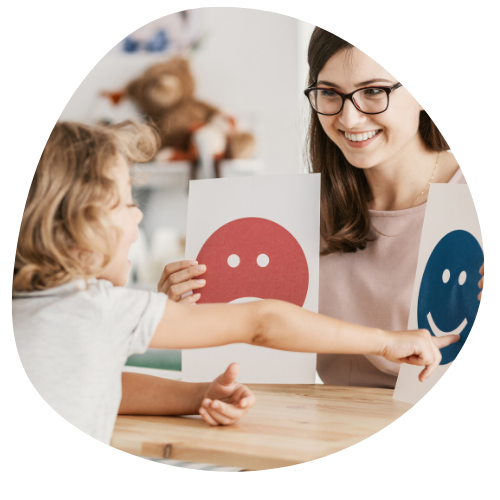
For some nonverbal individuals with ASD, this may also include use of visual supports and picture exchange communication systems (PECS)(25). Thanks to technology there have been huge leaps in alternative communication strategies for people who can’t use conventional language.
-
This helps develop fine motor skills, coordination, daily living activities, and sensory integration.
-
Helping a person with ASD understand the connection between how they think, how they feel, and how they behave. For young children, this should include parents and should be play and activity based, primarily.
-
Direct social skills intervention in a group setting to practice social interaction, verbal and nonverbal communication, turn taking, perspective taking, etc.
-
Helping children understand different situations that help increase independence and decrease problem behaviors ²⁶. These are short, targeted descriptions that help a person with ASD understand their world, and minimize anxiety. Often, social stories are used to help introduce new situations (like going to a doctor’s office, having a new sibling, going on an airplane ride, etc.)
-
There is not a specific medication that treats ASD, but some psychiatric medications can address specific symptoms of ASD, such as attention, aggression, depression, anxiety, and repetitive behaviors ²⁷. Medications work best in combination with behavioral therapies.
As our understanding of ASD, and the diversity of the spectrum and neurodiversity overall has grown, we have also increased our awareness of the many strengths that come from this brain difference. Quite a few strengths are identified, including ²⁸ :
Attention to detail
Logical reasoning
Visual / spatial skills and pattern recognition
Focus on interests and passions
Consistency
Aptitude towards repetition
Creativity
Memory
Academic aptitudes
Musical abilities
Humor
Of course not every person with ASD will have all of these gifts - just like every neurotypical child is not gifted with all abilities and gifts. However, focusing on the positives that come with loving someone with ASD improves quality of life and outcomes, instead of just focusing on deficits ²⁹.

What the research says
The earlier that ASD is identified, and a child has access to early intervention strategies, the better their adult outcomes are ³⁰.
ASD has no known direct cause, though we know there is a genetic link. The spectrum is vast and diverse in its presentation and symptomatology ³¹.
Because of the complexity of ASD, there are medical and psychological co-occurring conditions. Having medical and mental health support is critical for managing challenging behaviors and predicting the best outcomes ³².
What your child with ASD needs to know
As with any other child, a child with ASD wants acceptance and understanding. Some specific strategies that may help include:
-
Because a child with ASD processes information differently - and language may be a challenge - it is important to provide adequate processing time. Try giving one step of instruction at a time, and offer different forms of communication - show them how to do something by modeling, and narrate what you are doing as you do it. Less is more, when it comes to verbal communication sometimes.
-
Use multiple forms of communication. Many kids on the spectrum benefit from visual schedules - a visual depiction of what their routine will be, what steps they need to do (for example, a picture breakdown of how to get dressed in the morning, or how to brush one's teeth).
-
Many kids with ASD are sensory seeking, and some parents decide to have a “sensory space” for their child. This doesn’t have to be an entire room! A corner of the play room, the space under the work table, or the bottom bunk of a bunk bed can be turned into a sensory haven. Every child is different, so the sensory space should be tailored to your child. Some children need soft, squishy things - others may need a small ball pit! Some children want to swing, others want to jump! Teach your child to use this space to calm down and regulate if they are overwhelmed, or need to escape.
Sensory supports for sensory avoidant kids are important as well. A pair of headphones or ear plugs will help extend time in large, crowded public places. Take advantage of the increasing “sensory friendly” events such as at museums and theme parks - these are times when there are quieter environments, softer lights, reduced crowds, etc.
-
One of the symptoms of ASD is restricted interests - but one of the strengths is this intense, passionate focus on an area of interest. Use that interest to connect and engage with your child on the spectrum - sure, it can be a little bit repetitive to talk endlessly about Pokemon and their different powers, but this is also a chance for your child to practice language and conversation, turn taking, and can provide some “ins” for you to sprinkle in some other language. Try to get silly with it - if you are trying to increase vegetables in your little one, ask “What kind of veggies do you think Squirtle eats? Does Charzard like carrots too?”
-
Because a child with ASD will have different nonverbal communication strategies, it may seem like they aren’t paying attention when they aren’t making eye contact - though it may be that they have better attention and focus when they aren’t distracted by eye contact ³³.
-
“Stimming” is self-stimulatory behavior - children with ASD have more obvious and overt “stim” behaviors - though many neurotypical people “stim” as well (think of your coworker clicking her pen, or your brother jiggling his leg on the couch, for example). Stimming in ASD tends to help self-regulate and self-soothe, and there can be maladaptive behaviors that spring from efforts to extinguish the behaviors ³⁴. Rather, offer “time and space” context - perhaps there is a “Safe Stim” zone in the house, where your child can flap his hands without fear of a younger sibling or pet catching a hand. Or, help provide more subtle stimulatory opportunities - if your child “stims” by rubbing her hands on everything, she may benefit from a fidget toy, or even a strip of velcro on her desk to keep her focused and less distracting to peers.
If “stim” behavior is dangerous or self-injurious, these behaviors should be redirected and help should be offered to replace these behaviors with less destructive ones.
-
Because your child with ASD is different and unique from every other child with ASD, you will be the one that helps translate their experience to others. Don’t assume that just because they are nonverbal, they aren’t absorbing what you say - speak in positive terms about their abilities and capabilities when communicating with teachers and other professionals. As your child starts to ask questions about their differences, be honest! ³⁵ Keeping a diagnosis from a child can lead them to think that there is something wrong with them, and they may be making faulty conclusions. Other ways to help build self-advocacy include:
Offer choices when possible
Teach them how to say no
Even if it seems that they aren’t paying attention, speak TO your child, not ABOUT your child
-
Depending on your child’s needs and level of support indicated, there may be some future considerations to consider. Will your child need a guardian, or power of attorney when they are an adult? Should there be a special needs trust set up for their medical and housing care? Will they benefit from higher education (many colleges have disability services and supports for neurodiverse individuals), or will they be entering the workforce? Will they need disability support like Social Security or Medicaid? Autism Source has a database of resources that include special needs attorneys and financial advisors that can help look ahead at what your child may need.
Meet Leo - ASD, Level 1
Leo is in a preschool class with other 4 year olds - he loves to play on the playground, and swing as high as he can. He enjoys watching the other children play as well, but rarely will join them. He has a helper who comes into the classroom several times a day, but she doesn’t stay all day - just helps him get started on new activities, or transition between one thing and the next. Leo gets pulled out for speech and occupational therapy, 20 minutes for each activity each week, and he goes to a social skills class after school once a week, in addition to the swimming and karate that he participates in with his brothers after school. Leo loves to talk about bugs - he knows everything about insects and can spot a creepy-crawly from what seems like a mile away. At school, he isn’t as talkative. Mom found some ladybug stickers at the dollar store, and slipped them to the teacher - when his next piece of work came back with a ladybug sticker, Leo was delighted! He brought his paper to the teacher, and explained to her that ladybugs aren’t always ladies…this was the most he had talked to his teacher the whole school year!
Meet Noah - ASD, Level 2
Noah is in a communications classroom - not all of the kids in this class have ASD, but they are all working on developing language and communication skills. The room has several different seating options - bean bags, exercise balls, textured cushions, and Noah loves to do puzzles. He loves that there is a fit for every piece, and he loves the satisfaction of putting the pieces together into something bigger. On his desk, there is a laminated sheet that shows his daily routine. He gets worried when he misses Mom and Dad, and his teacher has put together a book of pictures of Mom, Dad, teachers, and other important figures that he can look at when he starts to get worried. Towards the end of the day, when he knows it's almost time to go home, he can get a little more worried - transitions are hard for him. The teacher knows he is starting to get more worried when they hear Noah repeating, “Go home?” He is benefitted by his social story, that he can look at that tells him that Mom and Dad always pick him up on time, and will take him home after school.
Meet Emma - ASD, Level 3
Emma is in ABA therapy for most of her day - she attends therapy 5 days a week, though the therapy room looks like a preschool - alphabet bordering the wall, and posters of colorful pictures and toys in their bins. She and her therapist work together at a small table, and there are other children working with their therapist as well. Emma loves to color, and her therapist is using that love to build on other skills, hoping to help Emma start using verbal language as well. Emma uses an iPad to communicate now - she has a PECS program that uses pictures to put together sentences. As Emma colors, her therapist is narrating the experience, “Oh, you are using a green crayon, you are coloring in the square, and then you colored next to the square.” Emma looked up and to the side, and then threw the crayon. The therapist cued her to the iPad, and Emma pushed the picture that represented “more.” “Do you need a different color?” Emma pushed the button for “more” again. The therapist pushed the buttons on the iPad while saying, “Red, please.” Emma repeated these actions, and the therapist enthusiastically gave her the red crayon. “Wow Emma! Nice job asking for that red crayon!”
About the author
Rachel Oppenheimer, PhD, PMH-C
Dr. Rachel Oppenheimer is a licensed psychologist and licensed specialist in school psychology, licensed to practice in both Texas and Florida. She founded Upside Therapy & Evaluation Center in 2016, working in private practice prior to that.
Resources our Experts Love

Autism Speaks ↗
- Particularly the 100 Day Toolkit, helping to make the most of the first 100 days following a formal diagnosis
Nutritionists
•
Adult mental health
•
Couples mental health
•
Infant & child mental health
•
Sleep coaching
•
Nutritionists • Adult mental health • Couples mental health • Infant & child mental health • Sleep coaching •

When to get
expert support
Sometimes you might need more support, and that's okay! Here are times you may consider reaching out to a specialist:
When you suspect ASD and the diagnosis would open up supports and interventions for your child
When you feel that you and your child with ASD can’t communicate
If you need positive behavior support resources
When behaviors feel out of control
When emotions feel out of control
-
U.S. Department of Health and Human Services. (2024). Autism spectrum disorder. National Institute of Mental Health. https://www.nimh.nih.gov/health/topics/autism-spectrum-disorders-asd:
Hazlett, H. C., Gu, H., Munsell, B. C., Kim, S. H., Styner, M., & Wolff, J. J., et. al. (2017). Early brain development in infants at high risk for autism spectrum disorder. Nature, 542(7641), 348–351. https://doi.org/doi: 10.1038/nature21369.
Markram, K., & Markram, H. (2010). The intense world theory – a unifying theory of the neurobiology of autism. Frontiers in Human Neuroscience, 4. https://doi.org/10.3389/fnhum.2010.00224
U.S. Department of Health and Human Services. (2020). Autism spectrum disorder: Communication problems in children. National Institute of Deafness and Other Communication Disorders. https://www.nidcd.nih.gov/health/autism-spectrum-disorder-communication-problems-children
Tashiro, T., Jackson, L., Robinson, J, & Wilde, O. (2024, June 19). Autism social interaction strategies. The Spectrum. https://thespectrum.org.au/autism-strategy/social-interaction/
American Psychiatric Association (2013) Diagnostic and statistical manual of mental disorders (5th ed)
ASD levels of severity. Autism Speaks. (2024). https://www.autismspeaks.org/levels-of-autism
Lai, M.-C., Lombardo, M. V., Chakrabarti, B., & Baron-Cohen, S. (2013). Subgrouping the autism “Spectrum": Reflections on DSM-5. PLoS Biology, 11(4). https://doi.org/10.1371/journal.pbio.1001544
Sandin, S., Lichtenstein, P., Kuja-Halkola, R., Hultman, C., Larsson, H., & Reichenberg, A. (2017). The heritability of autism spectrum disorder. JAMA, 318(12), 1182. https://doi.org/10.1001/jama.2017.12141
U.S. Department of Health and Human Services. (2023). Autism spectrum disorder (ASD). National Institute of Mental Health. https://www.nimh.nih.gov/health/statistics/autism-spectrum-disorder-asd
Yan, X., Li, Y., Li, Q., Xu, G., Lu, J., & Yang, W. (2024). Prevalence of autism spectrum disorder among children and adolescents in the United States from 2021 to 2022. Journal of Autism and Developmental Disorders. https://doi.org/10.1007/s10803-024-06390-7
Sajdeya, R., Brown, J. D., & Goodin, A. J. (2021). Perinatal cannabis exposures and Autism Spectrum Disorders. Medical Cannabis and Cannabinoids, 4(1), 67–71. https://doi.org/10.1159/000515871
Gardener, H., Spiegelman, D., & Buka, S. L. (2011). Perinatal and neonatal risk factors for autism: A comprehensive meta-analysis. Pediatrics, 128(2), 344–355. https://doi.org/10.1542/peds.2010-1036
Knopf, A. (2021). Time to remember: Vaccines don’t cause autism. The Brown University Child and Adolescent Behavior Letter, 37(7), 9–10. https://doi.org/10.1002/cbl.30559
Davidson, M. (2017). Vaccination as a cause of autism—myths and controversies. Dialogues in Clinical Neuroscience, 19(4), 403–407. https://doi.org/10.31887/dcns.2017.19.4/mdavidson
Burns, J., Phung, R., McNeill, S., Hanlon-Dearman, A., & Ricci, M. F. (2023). Comorbidities affecting children with autism spectrum disorder: A retrospective chart review. Children, 10(8), 1414. https://doi.org/10.3390/children10081414
Keski-Rahkonen, A., & Ruusunen, A. (2023). Avoidant-restrictive food intake disorder and autism: Epidemiology, etiology, complications, treatment, and outcome. Current Opinion in Psychiatry, 36(6), 438–442. https://doi.org/10.1097/yco.0000000000000896
Casanova, E. L., Baeza-Velasco, C., Buchanan, C. B., & Casanova, M. F. (2020). The relationship between autism and Ehlers-Danlos Syndromes/hypermobility spectrum disorders. Journal of Personalized Medicine, 10(4), 260. https://doi.org/10.3390/jpm10040260
Russell, G., Mandy, W., Elliott, D., White, R., Pittwood, T., & Ford, T. (2019). Selection bias on intellectual ability in autism research: A cross-sectional review and meta-analysis. Molecular Autism, 10(1). https://doi.org/10.1186/s13229-019-0260-x
Children’s Hospital of Philadelphia (2017). Autism’s clinical companions: Frequent comorbidities with ASD. Children’s Hospital of Philadelphia. https://www.chop.edu/news/autism-s-clinical-companions-frequent-comorbidities-asd
Hume, K., Steinbrenner, J. R., Odom, S. L., Morin, K. L., Nowell, S. W., Tomaszewski, B., Szendrey, S., McIntyre, N. S., Yücesoy-Özkan, S., & Savage, M. N. (2021). Evidence-based practices for children, youth, and young adults with autism: Third generation review. Journal of Autism and Developmental Disorders, 51(11), 4013–4032. https://doi.org/10.1007/s10803-020-04844-2
Shenoy, M. D., Indla, V., & Reddy, H. (2017). Comprehensive management of autism: Current evidence. Indian Journal of Psychological Medicine, 39(6), 727–731. https://doi.org/10.4103/ijpsym.ijpsym_272_17
Bailey, E. (2013) Pros and cons of Applied Behavior Analysis (ABA). Health Central https://www.healthcentral.com/article/pros-and-cons-of-applied-behavior-analysis-aba
Paul, R. (2008). Interventions to improve communication in autism. Child and Adolescent Psychiatry Clinics of North America, 17(4), 835–856.
Corbett, E., & Prelock, P. (2021). Picture Exchange Communication System. Encyclopedia of Autism Spectrum Disorders, 3492–3497. https://doi.org/10.1007/978-3-319-91280-6_801
Gray, C.(2015, November 2). What is a social story?. Carol Gray - Social Stories. https://carolgraysocialstories.com/social-stories/what-is-it/
U.S. Department of Health and Human Services. (2021). Medication treatment for autism. Eunice Kennedy Shriver National Institute of Child Health and Human Development. https://www.nichd.nih.gov/health/topics/autism/conditioninfo/treatments/medication-treatment
Halder, S., Bruyere, S. M., & Gower, W. S. (2022). Understanding strengths and challenges of people with autism: Insights from parents and Practitioners. International Journal of Developmental Disabilities, 70(1), 74–88. https://doi.org/10.1080/20473869.2022.2058781
Taylor, E. C., Livingston, L. A., Clutterbuck, R. A., Callan, M. J., & Shah, P. (2023). Psychological strengths and well-being: Strengths use predicts quality of life, well-being and mental health in autism. Autism, 27(6), 1826–1839. https://doi.org/10.1177/13623613221146440
Anderson, D. K., Liang, J. W., & Lord, C. (2013). Predicting young adult outcome among more and less cognitively able individuals with autism spectrum disorders. Journal of Child Psychology and Psychiatry, 55(5), 485–494. https://doi.org/10.1111/jcpp.12178
Alkire, D., Warnell, K. R., Kirby, L. A., Moraczewski, D., & Redcay, E. (2020). Explaining variance in social symptoms of children with autism spectrum disorder. Journal of Autism and Developmental Disorders, 51(4), 1249–1265. https://doi.org/10.1007/s10803-020-04598-x
Khasakhala, E., Bota, K., Ayaga, G., Sichari, M., Wesonga, B., & Kokonya, D. (2023). Comorbidity of mental health and autism spectrum disorder: Perception of practitioners in management of their challenging behaviour. International Journal of Developmental Disabilities, 69(3), 386–397. https://doi.org/10.1080/20473869.2023.2203531
Autism and eye contact. Autism Speaks. (2024). https://www.autismspeaks.org/expert-opinion/autism-eye-contact
Kapp, S. K., Steward, R., Crane, L., Elliott, D., Elphick, C., Pellicano, E., & Russell, G. (2019). ‘people should be allowed to do what they like’: Autistic adults’ views and experiences of Stimming. Autism, 23(7), 1782–1792. https://doi.org/10.1177/1362361319829628
Jack, C. (2022). “How and when should I tell my child they’re autistic?” Psychology Today. https://www.psychologytoday.com/us/blog/women-autism-spectrum-disorder/202207/how-and-when-should-i-tell-my-child-they-re-autistic