
Developmental Delays & Neurodivergence

Neurodivergences
What does it all mean?
25 MINUTE READ
Published August 2024
AUTHOR
Rachel Oppenheimer, PysD
Contributing Editor, Licensed Psychologist

You may have seen the terms “neurodivergent” or “neurotypical” bandied about. With all of the information floating around about development, these terms may cause alarm or concern, but we are here to break it all down, and present an overview of what it all means.

Is my child developing normally?
Is it OK that they are THAT into trains?
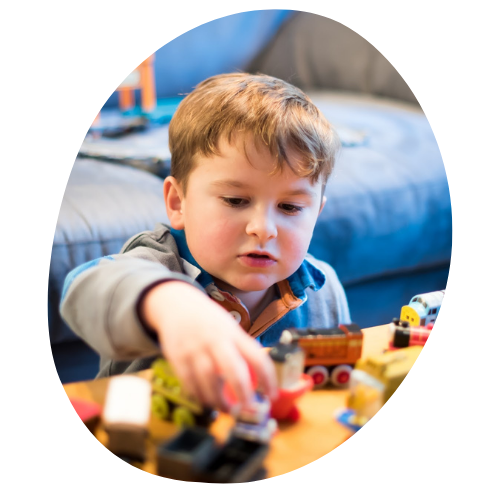
The term neurodivergence was coined in the 90s as an alternative to “disorder” or disability. It is an umbrella term that applies to learning or developmental disorders, including (but not limited to!) autism spectrum disorder, attention-deficit/hyperactivity disorder, and learning disorders. Basically, it is a term that applies to having a brain that is “wired differently” or requires different learning and teaching strategies than a “neurotypical” individual may need.
Neurotypical, on the other hand, is not necessarily a synonym for “normal” - afterall, what is normal? Rather, it is the absence of a formal diagnosis, or a brain that appears to be functioning similar to peers. When learning about the neurodivergence world, you may see the terms abbreviated to ND (neurodiverse) and NT (neurotypical). Often, if a family has a neurodivergent family member, the whole family is considered “neurodivergent,” as this is a family that hopefully accommodates the individual with a diagnosis as well as those that are neurotypical. All learning styles need support - neurotypical or neurodivergent!
This guide is meant to serve as an overview of some of the more common neurodivergences, as well as what to look for in your own child’s development, and when to be concerned.
Breaking it down further
Parenting guides and handbooks are excellent at providing milestones and checklists, letting you know what to expect and when to expect it as your child develops. However, many parents are left with the “What now?” when their child develops differently than expected. Usually it is either the parent and/or the pediatrician that starts to notice when milestones are being met late, or not at all - and it is these experts on the child, who knows them best, that can start noting what is “typical” and what may be “diverging” from the expected course. As with all children, development for a neurodivergent child is variable, and each child is different - you are the one who knows your child best.
First, some of the labels and diagnoses that are considered neurodivergences:
-
Also referred to as ASD, this is an umbrella term that replaced autistic disorder, Asperger’s disorder, and other developmental disorders in the latest revision of the Diagnostic and Statistical Manual (DSM-5) - the “guidebook” for mental health practitioners making diagnoses. ASD is marked by communication differences, social differences, and restricted interests and/or repetitive behaviors. Not all differences are necessarily delays, and some children with ASD have hyperlexia - this means that they are very verbal quite early. Other kids with ASD are social butterflies - the quality of their socialization is what may be different. Sensory processing differences are also commonly seen with ASD - kids can either be sensory seeking, sensory avoidant, or some of each (See below for more information on sensory processing)!
-
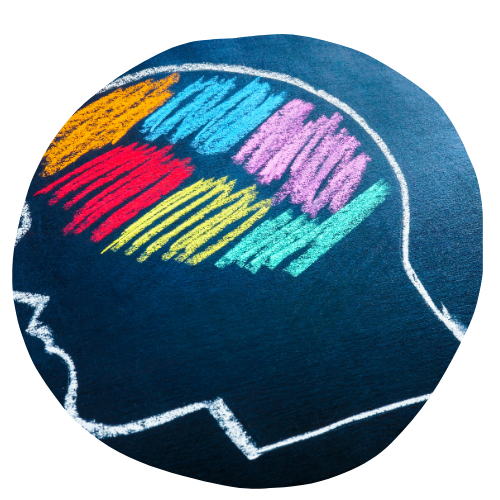
Also referred to as ADHD - this term replaced ADD, and is characterized by three subtypes, Inattentive type, Hyperactive/Impulsive type, and Combined Type. ADHD is a disorder of executive functioning. Executive functions are processes in the frontal lobe of our brains responsible for planning, sequencing, short term memory, anticipating consequences, and inhibiting our impulses. There is a lot of overlap between ADHD and ASD, and these two diagnoses are the ones most commonly referred to as neurodivergences.
-
Also referred to as LD, this is when there is a discrepancy between academic abilities and intellectual or cognitive abilities. There are multiple LDs, usually corresponding with an academic domain - common ones include dyslexia, or a disorder in reading, dysgraphia, or a disorder in writing, and dyscalculia, or a disorder in mathematics. To clarify, this isn’t just “bad grades,” but rather a difference in how the brain is processing. For example, individuals with dyslexia often see words backwards, or may reverse the letters in a word. No amount of studying can address this, rather, it is about working with the brain to adapt. For example, a child with dyslexia may need colored paper, bigger spaces between words and sentences, and a multi-sensory environment in order to learn how to read.
-
For some neurodivergences, such as Down Syndrome, there is a genetic marker and a diagnosis can be made even before some of the developmental differences are apparent. Physical characteristics are apparent in many genetic disorders like Down Syndrome, whereas an individual with ASD or ADHD does not have any physical characteristics that mark the diagnosis. Similar to ASD, there tend to be language and communication differences, though someone with Down Syndrome tends to have more social motivation than an individual with ASD (speaking generally! Every child is different!). Repetitive behaviors are more evident in someone with ASD, though restricted interests may be seen in both ASD and Down Syndrome.
-
Having a very high intelligence is also a neurodivergence, as there are social differences that come with being an outlier. For some children, they have both very high intelligence as well as ASD, ADHD or a learning disorder, which is known as being “twice exceptional.”
-
There is some debate on if other diagnoses in the mental health realm count as neurodivergences. It can be argued that experiencing anxiety, depression, or defiance is also “the brain wired differently.” Since neurodivergence is not a medical diagnosis or term - it is up to you if the term is helpful or not. No matter what, accommodating and understanding the differences that come with seeing the world differently, or processing the world differently is going to make a child feel as safe and connected as possible.

Some common questions
-
We don’t know! With conditions like ASD and ADHD we know there is some genetic correlation - if there is a family member or sibling with autism, chances are higher that a child will have autism. With twins, that correlation is as high as 60% . We also know that genetic diagnoses, like Down Syndrome, are associated with a higher rate of other neurodivergences, like ASD or ADHD (Muhle et al, 2004). But genetics aren’t everything. There are environmental factors as well. We know that it isn’t something as simple as “vaccines,'' “dairy,” or parenting style, but this is a heavily researched topic.
-
Some of this continues to be because of the unknown environmental factors. Some of it is also attributed to the genetic factors - neurodivergent individuals are having children with neurodivergence! The majority of this increase is in our better understanding and improved abilities to recognize these differences. Previously, individuals identified as neurodivergent would have been labeled as “disabled” or “disruptive.” Behavioral modifications versus support and accommodation was the approach. As we have understood neurodivergence more and more, we are seeing successful individuals in all facets of life who identify as neurodivergent. The number of neurodivergences likely hasn’t changed too much, but our ability to correctly diagnose and identify has improved. As a result, more individuals are correctly receiving the diagnosis, which is why it can feel like the rates are rising.
-
This is where neurodivergence differs from other conditions and diagnoses. Because this is about “brain wiring,” it isn’t necessarily that the difference can be “fixed” or “rewired.” A good sign that something is probably snake oil is the false promise of a cure - as of right now, there is no cure for autism, ADHD, or learning differences. However, symptoms can be managed and accommodated. Therapy, medication, diet, social supports, school accommodations, and learning specialists can all be a part of accommodating neurodivergence.
An important aspect of the neurodivergence movement - moving away from pathologizing, and embracing the gifts that come with a brain that is wired differently - is noticing the gifts and advantages that come from a neurodivergent brain. An individual with a neurodiverse brain tends to have creative and novel approaches to problem solving. The ability to intensely focus on a special interest can mean that an individual is a true expert on a subject. There tends to be an attention to detail, with strong pattern recognition skills. (Austin & Pisano, 2017)
-
Absolutely not! When there was a lot more that we didn’t understand about neurodivergence, there was the belief that parents caused it - the gamut from parents being too nurturing, to not being nurturing enough (also referred to as “refrigerator mothers” because of their “cold” nature) was blamed for conditions like autism. Now, we know that the majority of the cause is in genetics (Koi, P. (2021). As a parent, your support and understanding can help a child with neurodivergence fulfill his or her maximum potential.
-
Yes - this is common! Previous iterations of the DSM specified that ASD and ADHD could not co-occur, for example. With new understanding and updated research, the DSM-5 clarifies that these diagnoses and others can overlap. You may see the term “AuDHD” - this applies to an individual who has both ASD and ADHD. Having an identified neurodivergence means that there are likely some executive function challenges, and maybe some sensory differences as well - a proper diagnosis will help understand what is caused by what, and what can help.
-
Yes, both in prevalence rates as well as presentation. The Center for Disease Control (CDC) released their latest numbers in May and June 2024, stating that 1 in every 36 children will be identified as having ASD, and 11.4% of children are identified as ADHD (CDC, 2004). Boys are more likely to be identified than girls, though this may be due to the fact that boys tend to “externalize” and girls tend to “internalize” their differences. “Externalized” behaviors are the ones that typically disrupt other students, and may lead to a teacher or caregiver reaching out to a parent with their observations in a social setting. Girls tend to have restricted interests that are more “typical” to mainstream peers, such as American Girl dolls, or horses, and they are known to “mask” or “camouflage” more than boys do.
-
Great question! We will be covering the specifics of what types of tools are used to diagnose neurodivergence, and what to expect if your child is diagnosed in later guides. Right now, it is a good idea to start noticing and noting your concerns - start a document of questions you may have for a professional, as well as what you’ve noticed in terms of developmental milestones. Meet your child where they are and focus on their individual strengths, and what motivates them.

Neurodivergence terms to know
-
The manner in which we experience our sensory world. Neurodivergent individuals tend to have sensory processing differences. Some are sensory-seeking - these are the kids who are touching everything, crashing into couches (and people), enjoying sounds or certain frequencies. They need more sensory input than their peers may need, and they may be comforted by sensory experiences like swinging, swimming, jumping on the trampoline, etc. Sensory-avoiding kids are bothered by certain sensory experiences - these are the kids who meltdown at the sound of a toilet flushing, who can’t handle certain textures of clothing or foods, and who are benefited by quiet, calm, darker environments. These are the kids who need headphones to participate in a school assembly where there is a cacophony of sounds. Most neurodivergent individuals are somewhere along the sensory seeking or sensory avoidant spectrum, and may have certain seeking, and certain avoidant behaviors.
-
This refers to language that is either repetitive of oneself, or of others. Children demonstrating echolalia may repeat a part of a commercial or show, down to the intonation of voice - but may not communicate in other settings. They may repeat themselves, either in a whisper or normal voice, or they may repeat what you or others say. Echolalia may occur in the course of a typical language development - but when it persists, or is not in that context, it may be one of the repetitive behaviors noted in ASD diagnosis.
-
This is a tantrum to the extreme. Meltdowns typically last longer, and are more intense than the typical toddler tantrum. It is typically in response to sensory overwhelm, loss of predictability or control, and is typically a period of time where rational thought and behavior are “offline.”
-
This is short for “self-stimulatory behavior.” It is typically a sensory behavior, and can be present in a variety of contexts - we “stim” when we jiggle our leg, or click our pen as we think. Neurodiverse individuals tend to have more obvious stims, and they may do it for enjoyment, sensory seeking information, or to cope with anxiety and uncertainty. Common stereotypes of stimming include spinning, flapping ones hands or arms, or jumping.
-
ARFID is a separate diagnosis, and is not present in all neurodivergences. However, a subset of those who are neurodivergent also have eating behaviors that go beyond just “picky eating.” ARFID is an eating disorder, but it is not characterized by concerns with body image the way other eating disorders are. Rather, this is about sensory and rigidity, in that it may be about having a very select few of “safe” foods, or it may be about not being able to eat in settings outside of the home, or about a fear of eating or choking. ARFID can be severe to the point of requiring medical intervention, like a g-tube, though this is not always the case.
-
PDA is a relatively new term in relation to neurodivergence. Individuals with PDA are very threatened by any demand placed upon them - even things that are quite easy, or maybe even enjoyable at times. It can lead to meltdowns, or extreme tantrums, avoidance, or anxiety in the face of a demand. Parents have to be quite flexible and creative to find ways to motivate and engage a child with PDA.
-
Difficulty with showing and describing emotions. Kids with neurodivergence often have social differences, and emotional expression is a big part of the reason why. Children may appear “flat” in their expressions, or they may have emotional displays that are inappropriate or out of context for the situation. Neurodivergent individuals may have trouble experiencing the inner cues of emotions, and may have difficulties with emotional regulation, or managing these emotions (more than the neurotypical toddler - who also has emotional regulation struggles!)
-
This is a rare condition that is more common in individuals that are neurodivergent as compared to the neurotypical. Those with synesthesia may be able to “smell” or “taste” colors or numbers - it is a blending or crossing of the sensory and cognitive pathways (Cytowic, R.E. 2002).
Red flags
So, now that we have some of the many terms related to neurodivergence defined, we can discuss red flags and when to be concerned.
-
It would be unreasonable to expect your baby to have nuanced and well developed social use of eye contact - they are still learning to use their eyes in the first place! It is also normal for your child to be drawn to things like ceiling fans, high contrast visuals, and screens. However, a sign that there may be something else going on is if it is difficult to obtain your child’s eye contact, or if they pointedly seem distressed or uncomfortable with eye contact. Human nature has made faces and eyes very interesting and pleasing to a baby. A 2013 study suggested that babies who avoid eye contact or have decreasing eye contact at age 2 months are more likely to be diagnosed with ASD later on (Jones & Klin, 2013).
-
By 9 months, your child should know their name and turn in response to it. Your child may be distracted one or two times, but if there is a steady pattern of your child ignoring their name or nickname or your efforts to obtain their attention, their hearing should be checked, and this may also be a warning sign of a future neurodivergence.
-
Interactive games, like peek-a-boo, should be apparent by 12 months. By 15 months, a neurotypical child is showing toys and trinkets that they find interesting to others, and by 36 months they should be able to play with others. By 4 years, pretend play should start to emerge, such as playing dress up, or pretending to be mommy or daddy. By 5, the neurotypical child is able to sustain a play narrative with others, and engage in turn-taking with others.
-
Neurotypical children begin to show facial expressions by 9 months of age, and start to show gestures, such as waving by one year, and pointing by 18 months. By 18 months, a neurotypical child will also begin to combine speech and gestures.
-
Babies have the ability to differentiate sounds (pleasure versus displeasure) as early as the newborn stage, and will start to respond to you with sounds and coos within the first few months. By 6 months, your child will start to understand “no” and will start to make babble sounds (ma-ma, ba-ba, da-da) - this will start to have more meaning, associating “mama” and “dada” by their first birthday and beginning to imitate other words. By 17 months, a neurotypical child should have a vocabulary of at least 4-6 words - though it is not unusual for only close family members to understand those words! Between 18-24 months, a child’s vocabulary should start to expand, and the child will start to make animal sounds, and combine words “go out,” “more play,” and “I want.” Pronoun development might start as well - though it is common for this to be imperfect! Between ages 2 and 3, pronouns should start to make more sense, and a child should be able to answer simple questions, use inflections to demonstrate that they are asking questions, and use grammatical markers like plural words and past tense verbs. Between 3-4, children can group similar concepts verbally (colors, shapes, animals, foods), use the majority of speech sounds, be more intelligible to individuals outside of the family, and repeat full sentences. Between 4-5, children start to understand spatial concepts like “inside, behind, next to.” They can answer “why” and “how” and can start to describe things that they’ve done. By 5, they are able to sequentially describe an event, understand rhyming sounds, have a back and forth conversation, and use their imagination in language. If there are delays across these processes, that may be a red flag for neurodivergence.
-
Children play in so many different ways! It can be a red flag when a child plays with toys the same way every single time. Lining up toys is common in play, but doing this repeatedly, instead of how the object is meant to be used, and becoming upset when this is changed can also be a red flag. Repeating words and phrases (echolalia) or repetitive body movements (stimming) is cause for concern if this isn’t just a passing phase. Playing with only certain parts of a toy, ignoring all else (for example, opening and closing the dollhouse doors, but not using any other part of the dollhouse). Rigidity about following certain routines, and becoming upset by minor changes (for example, meltdowns when mommy puts her hair in a ponytail, or daddy wears his glasses instead of contacts). Obsessive interests. Sensory differences. These all count under restricted interests and repetitive behaviors to be concerned about - if they persist beyond the typical “phase” that most children develop through.
What it might look like for you
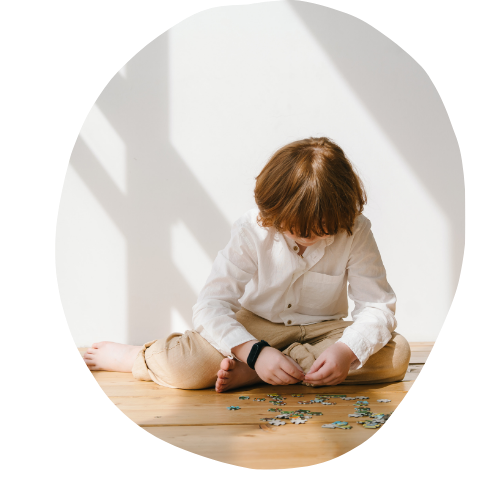
SAMANTHA HAS A 3-YEAR-OLD SON MAX.
Max was an exceptionally easy baby - he loved to be in his bassinet, and never needed to be held the way his older sister did - you couldn’t put her down! Max was happy to lay by himself and look around - he was such an observant baby, and so quiet - Samantha often had to check on him, because he wasn’t the joyful coo-er the way his sister was, either! As Max got older, he did start to use words, but his sister often talked for him, and he was happy to let her lead the way. Once Max hit three years old, he joined the preschool co-op that his sister went to as well. The teacher noticed that Max was a hitter - he did not like other children in his space, often hitting and one time even biting a peer who joined him at the water table. And Max LOVED the water table - the teacher remarked that this is all Max wanted to do during free play, and it was difficult to redirect him to other toys and games. Max engaged in “parallel play,” meaning that he was content to play next to other children away from the water table, but he did not seem to care or notice if they were there or not - he was not interacting with the other children. At home, Max seemed to be getting sadder. Samantha noticed that he was having meltdowns almost every morning as they got ready for school, and his picky eating was getting worse and worse. Samantha was excited to pick Max up one day, because she got a new car! The new SUV was so much better than her old minivan, and Max’s sister was excited to show Max all of the features they got to share in the back seat. When Max saw the new SUV, he threw himself onto the pavement, and began to scream! True tears, he was almost afraid of the new car, and it took Samantha several moments of deep breaths (and ignoring the spectators in the parking lot) to convince Max to safely get into his car seat, and go home - she even promised to go visit the old van in the car lot - anything to get Max off the ground! Max’s sister reminded Samantha about the time Max had this reaction to Daddy’s new sunglasses. Max does not like change! It was on the way home that Samantha remembered this guide, and thought it may be time to reach out to the pediatrician.
NIMISHA IS A VERY BRIGHT GIRL.
Everyone was always commenting on how amazing it is that a 4-year-old can read at her level, but Nimisha has been able to identify letters and certain sight words since she was an infant - she could identify specific letters on her play mat by 9 months old! Nimisha’s parents and grandparents leaned into her academic abilities, and she had alphabet blocks, letter magnets, and a chalkboard easel that she loved to play with, and make words with. She loved to sit in the corner and “read” books - and it was soon after her third birthday that Nimisha’s mother noticed that she really was reading, not just pretending to read! Nimisha has some “quirks,” such as refusing to wear anything but blue jeans, and she once cried when forced into a dress for a family event, missing the “hard” texture of her blue jeans. She asked to sleep in the jeans that night! Nimisha doesn’t tend to interact with kids her own age, preferring to spend her time at preschool reading, or talking to her teachers. Nimisha’s parents have noticed that she tends to walk on her toes, but people have told them that she will grow out of it - maybe she will be a ballerina! Who wears jeans! They don’t have any other kids, so they figure that is why she avoids peers - but even when interacting with her cousins, she tends to hang back and watch, or read by herself. Nimisha is very verbal, and others say that she “talks like a professor;” she never had the baby talk phase that other kids seemed to have. NImisha’s mom thought about bringing some of these things up at her well-child visit, but thought it might sound like bragging - after all, it's only kids who aren’t talking yet that are at risk of a developmental disability, right?
MICHELLE ALWAYS KNEW THAT THERE WAS SOMETHING DIFFERENT ABOUT HER BABY, BRYCE.
Bryce didn’t appear as interested in her as her older children, and she never could “connect” with him in terms of eye contact during the newborn stage. He met his motor developmental milestones, but he always seemed clumsier than other kids. She had Bryce’s hearing checked twice, because he didn’t turn in response to her voice as a newborn, and even as he got closer to one, he didn’t seem to respond to his name. Bryce learned how to drop things, and he could spend long periods of time dropping toys in front of his face - he loved to watch things fall. He has just turned one year old, and he still isn’t making sounds - he will cry when he is upset or frustrated, but he isn’t babbling or starting to say words yet. Everyone tells her that she is just being paranoid - he is the youngest, so it makes sense that he is the slowest to talk. The pediatrician told her to “wait and see” and that “boys talk later.” But she knows in her gut that there is something different about Bryce.
None of the children mentioned above can be diagnosed from a vignette alone. But all three children are demonstrating some of the red flags and differences in development that may be cues to look a little more, and to rule out a neurodivergence.
Keep in mind
A diagnosis of ADHD, ASD, or any other neurodivergence does not change your child - they are still the same unique, lovable, perfect person that they were before.
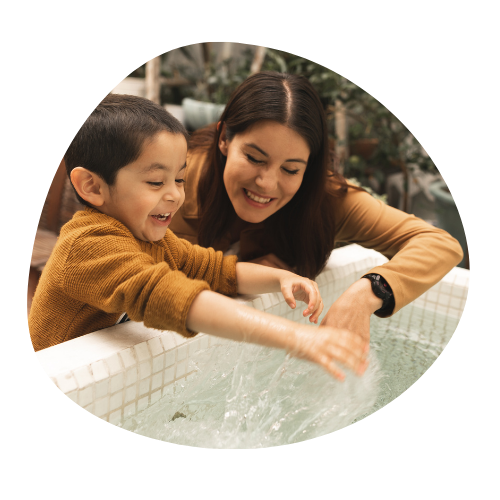
Neurodivergence is not contagious. If your child has a friend with a “label,” they won’t catch the diagnosis from their friend. Even if your child starts to imitate their friends behaviors - imitation being normal in all children - it doesn’t mean that they will end up with a diagnosis as well.
You can’t “out parent” neurodivergence. When helpful friends and family see meltdowns and rigidity, they may want to offer some “tips” like “You need to be more firm,” or “You shouldn’t always give in.” There is no perfect parenting strategy that will eliminate a developmental disorder. You are the expert on your child - smile, say “thank you,” and continue to make the parenting decisions that are best for your family.
Positive reinforcement works better than punishment. Especially true for kids with executive functioning challenges, it can be incredibly difficult to tie behaviors to consequences when you are dealing with neurodivergence. Instead, attempting to reward and reinforce the behaviors that you want to see tends to lead to better results. Walking a balance between routine and flexibility, kids tend to do best with predictability - if they know that they will get to return to a preferred special toy after doing something less preferred, you may have better results.
About the author
Rachel Oppenheimer, PhD, PMH-C
Dr. Rachel Oppenheimer is a licensed psychologist and licensed specialist in school psychology, licensed to practice in both Texas and Florida. She founded Upside Therapy & Evaluation Center in 2016, working in private practice prior to that.

Nutritionists
•
Adult mental health
•
Couples mental health
•
Infant & child mental health
•
Sleep coaching
•
Nutritionists • Adult mental health • Couples mental health • Infant & child mental health • Sleep coaching •

When to get
expert support
Sometimes you might need more support, and that's okay! Here are times you may consider reaching out to a specialist:
If you feel that development is not progressing as expected - keeping in mind that every child is different, developing at his or her own unique rate - it's better to start looking for answers and guidance early.
Early intervention predicts the best outcomes for kids, as these interventions come while your child’s brain is still “plastic,” meaning still developing.
There are “critical periods” in development when the brain is particularly receptive to certain concepts, such as language development - intervening early means that you are more likely to reach these critical periods.
If you notice any of the “red flags” mentioned above, it is worth talking about with a professional.
-
American Psychiatric Association (2013) Diagnostic and statistical manual of mental disorders (5th ed)
Austin, R.D. & Pisano, G.P. (2017, May-June) Neurodiversity as a competitive advantage. Harvard Business Review (96-103)
Centers for Disease Control and Prevention. (2024). Signs and symptoms of autism spectrum disorder. Centers for Disease Control and Prevention. https://www.cdc.gov/autism/signs-symptoms/
Cytowic, R.E. (2002). Synesthesia: A union of the senses, 2nd ed. Boston Review
Jones, W. & Klin, A. (2013) Attention to eyes is present but in decline in 2-6 month old infants later diagnosed with autism. Nature, 504 (427-431)
Koi, P. (2021) Genetics on the neurodiversity spectrum: Genetic, phenotypic and endophenotypic continua in autism and ADHD. Studies in History and Philosophy of Science, 89 (52-62)
Muhle, R., Trentacoste, S.V., & Rapin, I. (2004) The genetics of autism. Pediatrics, 113(5) (472-486)
Stanford Medicine Children’s Health. (2024). Age-appropriate speech and language milestones. https://www.stanfordchildrens.org/en/topic/default?id=age-appropriate-speech-and-language-milestones-90-P02170